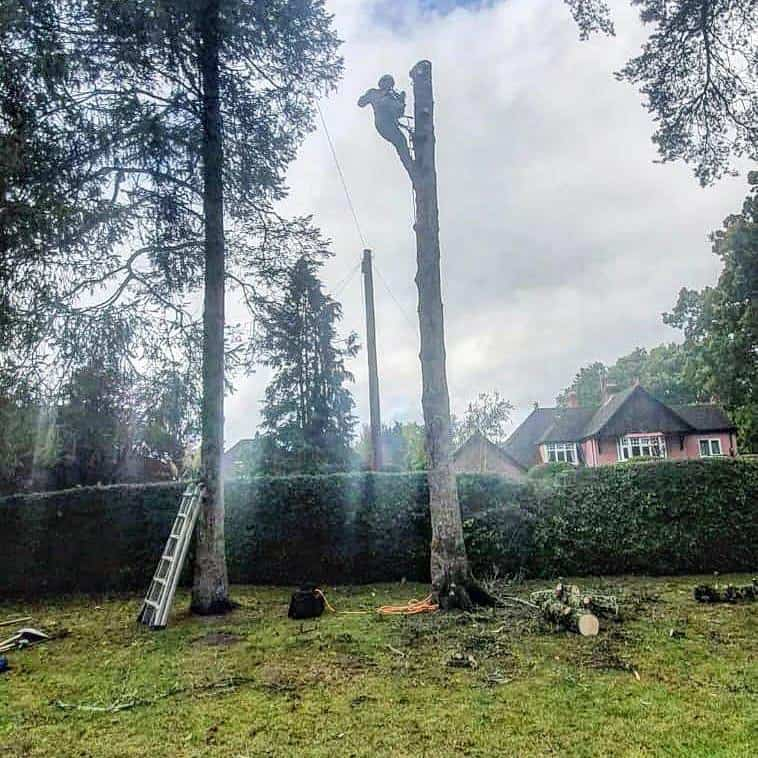
Understanding the Purpose of Professional Crown Reduction
A large tree can be an attractive feature, but its size may eventually become difficult to accommodate. Long branches can extend over roofs, paths and garden buildings, while an uneven canopy may place excessive weight on particular limbs. In suitable cases, crown reduction can make the tree more manageable while preserving its natural form.
For property owners in Eastleigh, Hampshire, the decision to reduce a tree should be based on its species, health, structure and surroundings. Crown reduction is a skilled pruning method rather than simply cutting branches back as far as possible.
What Is Crown Reduction?
Crown reduction decreases the overall height or spread of a tree’s canopy. Selected branches are shortened to suitable growth points, creating a smaller crown while maintaining a balanced outline.
The work may concentrate on:
- Reducing the overall dimensions of the canopy
- Shortening unusually long or heavy limbs
- Rebalancing uneven growth
- Increasing clearance from nearby structures
- Reducing pressure on vulnerable branch unions
- Retaining an appropriate amount of healthy foliage
A well-planned reduction respects the tree’s natural shape. The amount removed will depend on how the tree is likely to respond and what can be achieved without causing unnecessary stress.
When Can Crown Reduction Improve Safety?
Crown reduction may improve safety when excessive branch length or an unbalanced canopy is increasing mechanical stress. Shortening selected limbs can reduce their leverage and lessen the load placed on vulnerable unions.
It may be considered when:
- One side of the crown has become disproportionately heavy
- Large branches extend over frequently used areas
- Long limbs are vulnerable to movement in strong winds
- Previous branch loss has left the tree unbalanced
- The canopy is placing pressure on weakened unions
- Branches are growing too close to buildings
Crown reduction cannot correct every structural defect. Serious trunk decay, significant root disturbance or major splits may require a different approach. A professional assessment should determine whether reducing the crown will meaningfully address the concern.
How Can It Make a Tree Easier to Manage?
A tree that has outgrown its available space can create recurring problems. Branches may obstruct access, reduce daylight or repeatedly grow towards roofs and other structures.
A suitable reduction can:
- Improve clearance around the property
- Bring an oversized canopy back into proportion
- Reduce interference with gutters and roofing
- Limit excessive overhang above paths or driveways
- Improve the balance of a poorly formed tree
- Make future maintenance more straightforward
The objective is not to stop the tree from growing. Instead, the work manages its present size and encourages a more appropriate framework for future growth.
Crown Reduction Versus Crown Thinning
Crown reduction and crown thinning are different treatments. Reduction decreases the height or spread of the canopy by shortening branch ends. Thinning selectively removes smaller branches throughout the crown without substantially changing its overall dimensions.
Crown thinning may improve light penetration and reduce canopy density, but it will not solve a problem caused by branches extending too far. Crown reduction is generally more relevant when the tree itself has become too large for its surroundings.
In some situations, a carefully planned combination of pruning methods may be appropriate. The tree’s condition should guide the work rather than appearance alone.
Crown Reduction Versus Crown Lifting
Crown lifting removes or shortens selected lower branches to increase clearance beneath the tree. It can be useful where growth obstructs paths, driveways or garden access.
However, crown lifting does not reduce the height or upper spread of the canopy. If the main concern is an oversized or unbalanced crown, reduction is likely to be the more relevant technique.
Removing too many lower branches can alter the tree’s balance and leave large wounds on the trunk, so crown lifting also requires careful planning.
Why Excessive Pruning Can Be Harmful
Removing too much growth at once can weaken a tree and interfere with its ability to produce energy. Severe cutting may also encourage dense, rapidly developing shoots that are poorly attached and require further management.
Poor reduction work can lead to:
- Large pruning wounds
- An unnatural or unbalanced shape
- Excessive regrowth
- Greater exposure of remaining branches
- Decay entering through unsuitable cuts
- Reduced tree vitality
This is why indiscriminate topping is not the same as professional crown reduction. Correct pruning positions, branch selection and the proportion of canopy removed all influence the result.
What Makes a Tree Suitable for Crown Reduction?
Not every tree responds to crown reduction in the same way. Suitability depends on several factors, including:
- Species and natural growth habit
- Age and general vitality
- The condition of the trunk and main branches
- The location of structural weaknesses
- Previous pruning history
- The required amount of reduction
- Available space around the tree
A healthy tree with manageable structural concerns may respond well to carefully selected pruning. A severely declining or unstable tree may need a different form of work.
Will Crown Reduction Be a One-Time Solution?
Crown reduction can provide valuable improvement, but the tree will continue to grow. New shoots will develop around retained branch ends, and some trees produce regrowth more vigorously than others.
Future inspections can assess how the canopy is developing and whether light maintenance is needed. A considered programme of smaller interventions is often better for the tree than allowing it to become excessively large before carrying out another substantial reduction.
Why a Professional Assessment Matters
The visible size of a tree is only one part of the decision. A tree surgeon should also examine branch unions, deadwood, cavities, cracks, previous pruning wounds and signs of root or trunk problems.
This assessment helps establish:
- Whether crown reduction is suitable
- Which branches are contributing to imbalance
- How much growth can be removed appropriately
- Whether deadwood or damaged limbs also need attention
- Whether another tree surgery method would be more effective
A tailored approach gives the tree the best chance of remaining healthy, balanced and appropriate for its surroundings.
Conclusion
Crown reduction can make a large tree safer and easier to manage when excessive height, spread or uneven growth is creating a genuine concern. By shortening selected branches and preserving a balanced structure, it can improve clearance and reduce strain on vulnerable parts of the crown.
If you are concerned about a large or unbalanced tree, LM Tree Surgery Eastleigh can assess its condition and recommend whether crown reduction is appropriate. Professional advice will help ensure that any work supports both the tree and the surrounding property.
Call us on: 023 8001 2396
Click here to find out more about LM Tree Surgery Eastleigh
Click here to complete our contact form and see how we can help with your tree needs.