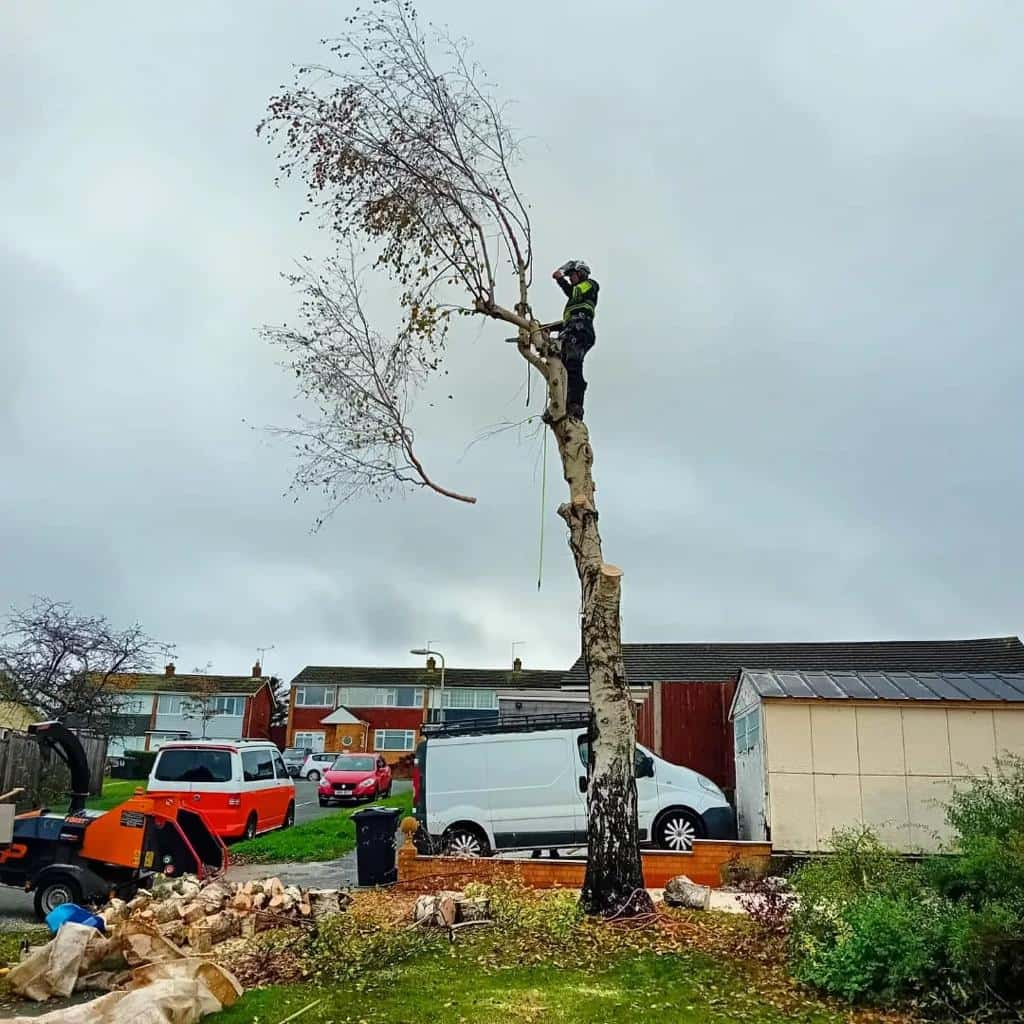
Trees provide shade, privacy and natural beauty, but as they mature, their canopies can sometimes become too large for their surroundings. Overhanging branches, excessive spread and dense growth may affect gardens, reduce natural light or bring branches too close to buildings. When this happens, crown reduction can help manage a tree’s size while preserving its natural shape and supporting its long-term health.
For homeowners in Eastleigh, Hampshire, professional crown reduction offers a considered way to manage overgrown trees without resorting to unnecessary removal. Understanding how the process works, when it is appropriate and why careful pruning matters can help you make informed decisions about your property’s trees.
What Is Crown Reduction?
Crown reduction is a tree surgery technique that reduces the overall height and spread of a tree’s canopy. A tree surgeon selectively shortens suitable branches to create a smaller, more manageable crown while maintaining the tree’s natural form.
Unlike indiscriminate cutting, proper crown reduction focuses on carefully chosen branches and suitable growth points. The aim is to reduce the canopy without leaving large, blunt cuts or damaging the tree’s structure.
The amount of reduction depends on the species, age, condition and natural growth habit of the tree. A professional assessment helps establish what can be removed safely while retaining a balanced appearance.
Signs Your Tree May Benefit from Crown Reduction
Not every large tree needs pruning simply because it has grown. However, there are several situations in which crown reduction may be worth considering.
The Canopy Has Outgrown Its Space
A tree may gradually spread across a garden, extend over seating areas or grow too close to surrounding structures. Crown reduction can help manage the canopy’s dimensions and make better use of the available outdoor space.
Branches Are Growing Towards Buildings
Branches extending close to roofs, walls or other structures may need attention, particularly if they are rubbing against surfaces or obstructing access. Selective crown reduction can help create appropriate clearance where the tree’s structure allows.
Too Much Shade Is Reaching the Garden
An expanding canopy can reduce the amount of daylight reaching lawns, patios and parts of the home. Reducing the crown may allow more light through, although the result depends on the tree’s position, density and surrounding environment.
The Tree Has an Unbalanced Appearance
Uneven growth or an excessively broad canopy can make a tree appear poorly proportioned. Skilled pruning can improve its balance while respecting its natural shape, rather than forcing it into an artificial outline.
You Want to Manage Future Growth
Where a tree is becoming difficult to accommodate, a suitable reduction may help bring its size under control. However, crown reduction is not a permanent solution to growth, and future maintenance may be necessary depending on the species and site conditions.
How Crown Reduction Helps Maintain Tree Health
One of the main benefits of professional crown reduction is that it can manage a tree’s dimensions without removing the entire canopy. By making selective cuts, a tree surgeon can retain much of the tree’s structure and natural appearance.
Careful pruning can also remove selected damaged or poorly positioned branches where appropriate. This may improve the crown’s overall arrangement and reduce specific problems caused by excessive growth.
However, crown reduction must be carried out with the tree’s biology in mind. Removing too much foliage can reduce the tree’s ability to produce energy, encourage weak regrowth and create unnecessary stress. Excessive cutting may also leave large wounds that are slow to close.
For these reasons, the objective should be a measured reduction rather than cutting back as much as possible. The correct approach depends on the individual tree and its condition.
Crown Reduction vs Crown Thinning: Understanding the Difference
Crown reduction and crown thinning are different pruning techniques, and choosing the right one depends on the problem you want to address.
Crown reduction reduces the overall height or spread of the canopy by shortening selected branches. It is generally considered when a tree has become too large for its surroundings.
Crown thinning, by contrast, selectively removes some branches throughout the canopy to reduce its density while usually retaining its overall dimensions. It may be suitable when the main concern is a dense crown rather than excessive height or spread.
Neither technique is appropriate for every tree. A professional tree surgeon can assess the canopy and recommend the method most likely to achieve the desired result without compromising the tree’s health or structure.
Why Professional Crown Reduction Matters
Crown reduction requires knowledge of tree growth, branch structure and appropriate pruning techniques. Poorly executed cuts can damage the tree, spoil its natural form and encourage unsuitable regrowth.
A qualified tree surgeon will consider the tree’s species, existing condition, surrounding structures and the extent of reduction needed. Work should be planned around suitable branch junctions and natural growth points, with care taken to maintain a balanced canopy.
Professional assessment is particularly important for mature trees, where heavy or poorly planned pruning may have lasting effects. It also helps establish whether crown reduction is the most suitable option or whether a different form of tree maintenance would be more appropriate.
Crown Reduction Services in Eastleigh, Hampshire
If an overgrown tree is affecting your garden, limiting light or growing too close to nearby structures, LM Tree Surgery Eastleigh can help you explore suitable tree care options.
A professional assessment can establish whether crown reduction is appropriate and identify how much of the canopy can be reduced while maintaining the tree’s natural character. The focus should be on achieving a practical result that respects the tree’s health and the needs of your property.
Conclusion
Crown reduction can be an effective way to manage overgrown trees, control their height and spread, and maintain a more suitable canopy for the surrounding space. When carried out carefully, it can help preserve a tree’s natural shape while addressing issues caused by excessive growth.
For homeowners in Eastleigh, Hampshire, LM Tree Surgery Eastleigh provides professional advice and tree surgery services tailored to individual trees and their surroundings. If you have a tree that has outgrown its space, get in touch to discuss whether crown reduction is the right solution for your property.
Call us on: 023 8001 2396
Click here to find out more about LM Tree Surgery Eastleigh
Click here to complete our contact form and see how we can help with your tree needs.